Heat Pump Repair
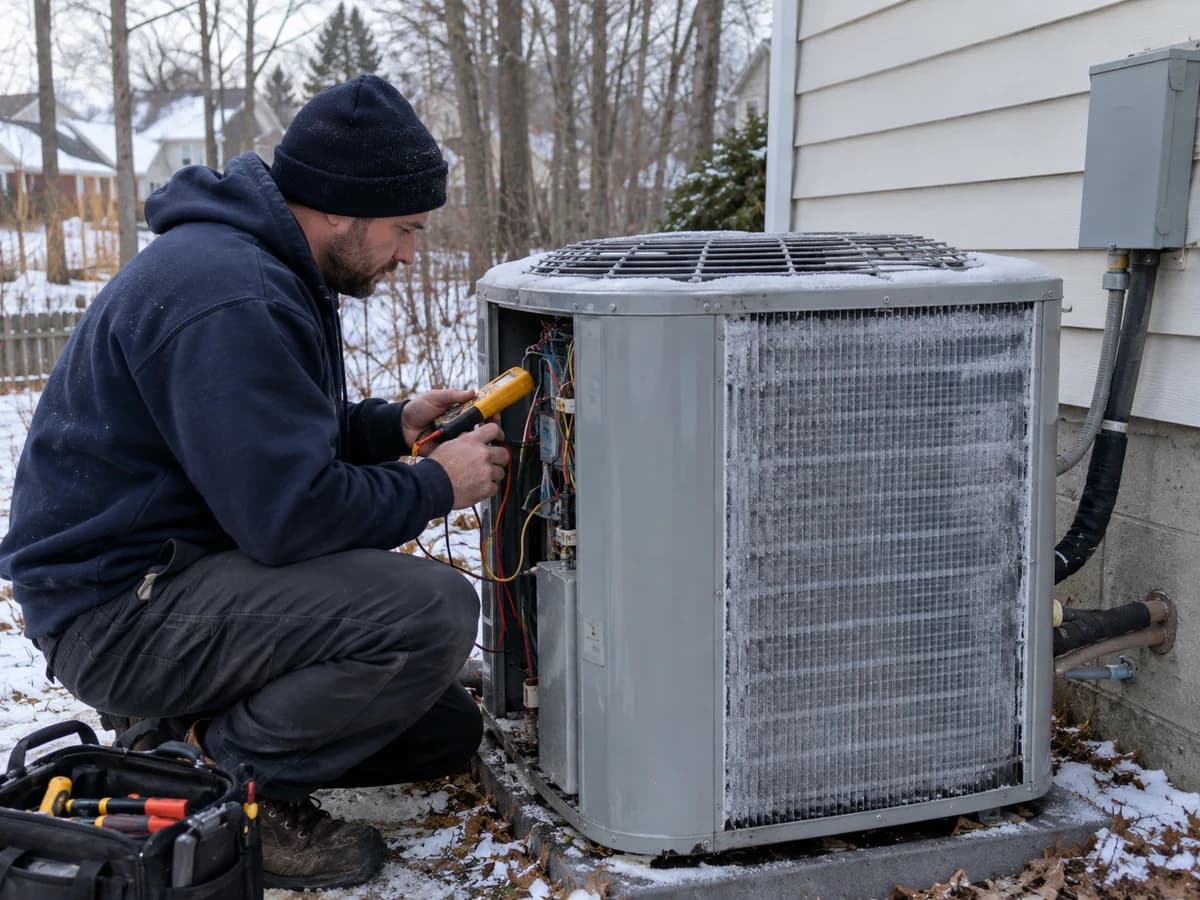
A heat pump that ices over and stays iced, runs without stopping or only heats on backup usually has a defrost fault, a backup heat setting, a refrigerant problem or a bad reversing valve. We find which one and give you the price before we fix it.
What we fix on a heat pump
- Outdoor unit iced over
- Heating on backup element only
- Unit runs and never cycles off
- No heat below a certain temperature
- Loud noise from the outdoor unit
- Cooling fine but not heating
What changes the price
- Which part failed, especially if it's the reversing valve or the compressor
- The refrigerant type and how much charge it needs
- Whether the fault is in the controls or mechanical
Before you book heat pump repair
The electric bill jumped and nobody knows why.
A common cause is backup heat running for hours on mild days. We check the backup heat and the thermostat setup on every heat pump repair.
Ice on the outdoor unit means it's finished.
Usually not. Steam coming off the unit is the defrost cycle clearing ice. If it ices up and never clears, we check the reversing valve, the defrost control, the sensors and the charge.
You get pushed into replacing it.
You hear the fault and the repair price first, and we tell you whether that fix buys you years or just gets you to spring.
When heat pumps struggle around DC
Heat pumps lean hardest on backup heat in the December to February rush. Ice and defrost questions start after the first freeze, around November 12. See heat pump not heating.
Get your heat pump looked at
- Backup heat and thermostat checked every visit
- Diagnosis and price before the repair starts
Or call us directly
(240) 695-4415Get Heat Pump Service
We take insurance jobs. Financing may also be available for qualifying projects. Ask when you call.
How the job runs
- 1We start with what you're seeing and test the reversing valve, defrost control, sensors and charge against it.
- 2We look at how the backup heat and thermostat are set up, since that's often behind a high bill.
- 3Before any part is swapped, you hear what failed and what the fix costs.
- 4After the repair we run it in heat and in cool, and if the weather allows we watch it go through a defrost cycle.
- 5We tell you whether the repair fixes the system or just puts off a replacement.
Heat Pump Repair questions we get asked
Why does my heat pump blow cool air in winter?
⌄
Steam is coming off the outdoor unit. Is that a problem?
⌄
How long should a heat pump last?
⌄
Should I repair my heat pump or replace it at its age?
⌄
Why does my heat pump run all the time in winter?
⌄
What does ice buildup on a heat pump in winter mean?
⌄
Why does my heat pump make a loud noise when it starts?
⌄
Is it safe to run emergency heat while I wait for a repair?
⌄
What do I do if my heat pump freezes over completely?
⌄
Why our heat pump repairs hold up
Defrost and valve repairs warranted
A defrost board, sensor, reversing valve or charge correction we carry out is warranted for 60 to 90 days on the workmanship, depending on the job.
Tested in both modes
Before we leave we run the heat pump in heating and in cooling, so a repair made in winter still holds in the first warm week.